Bramble (Blackberry)
Scientific Name
Common Names
Family
Irish Name
Rubus (fruticosus)
wild blackberry, brambles
Rosaceae
Dris
Scientific Name
Rubus (fruticosus)
Common Name
Wild blackberry, brambles
Family
Rosaceae
Irish Name
Dris
Plant Description
If you have ever picked a blackberry off a bush in your lifetime, then congratulations, you can say that you have foraged before:) This is a plant very easy to identify and amazing to add to any recipes or to eat straight off the bush. Interestingly, the name of the fruit is known as the blackberry, but the name of the plant is the bramble, which comes in many forms. (Wright, 2020)
How to identify
Blackberries grow everywhere, in woodlands, on hedges and on walls. There is little to say about how to identify this plant, as you have most likely picked its delicious fruits before.
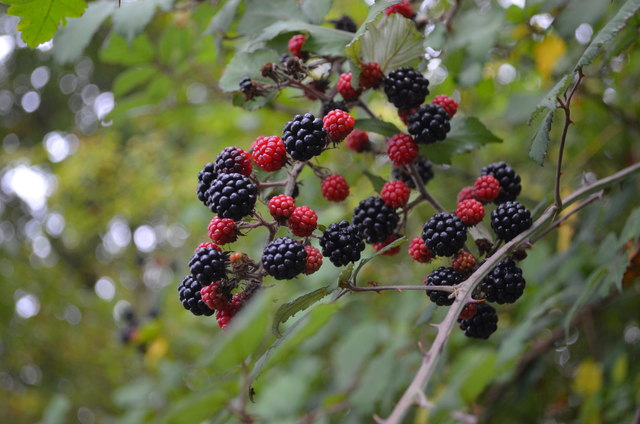
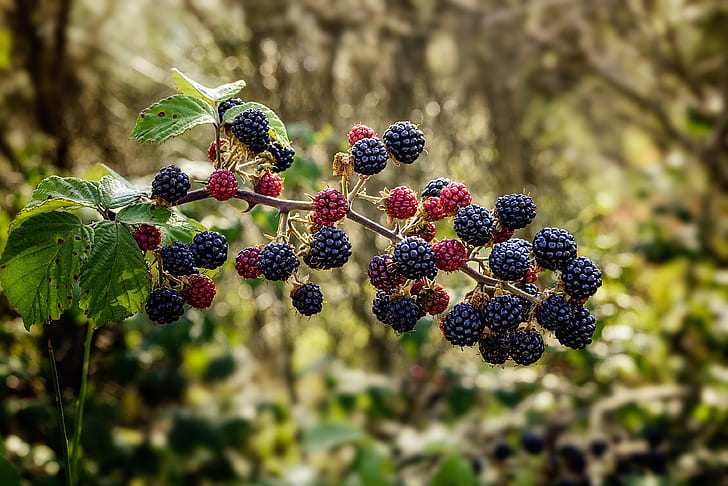
Blackberries form thick briar patches that can be hard to eradicate. They are brambles that many people view as invasive and noxious weeds. The art of course most easily identified when in fruit as they begin to form green, then red and finally black or deep purple berries as the season continues. (Codekas, 2015; Wright, 2020)
Harvesting Time
August to September
The blackberry can be found in early July and October, but only in ideal conditions or at great locations, so keep your eyes peeled.
The leaves can also be harvested, most commonly to make tea. “Herbalists often use raspberry leaf tea to ease menstrual symptoms, help with labour, and help breastmilk production.” So make sure to do further research to educate yourself on its effects and ask your doctor about consuming it, especially if pregnant! (Codekas, 2015)
Plant Lookalikes⚠️
The only look-alikes are other berries, such as wild raspberries, dew berries and mulberries, all of which are edible.
Safety Notice⚠️
Be carefull when harvesting the fruit as the plant has thorns that can and will scrape you, so be mindful of this.
Additionally, blackberry juice leaves tough stains, so make sure you don’t wear your finest attire. 🙂
Nutritional information per 100g
Vitamins
Vitamin
Content per 100 g
%RDI
Vitamin A | 11μg | 1% |
Vitamin C | 21mg | 23% |
Vitamin E | 1mg | 8% |
Vitamin K | 20μg | 17% |
Minerals
Mineral
Content per 100 g
%RDI
Beta carotene | 128μg | |
Choline | 9mg | 2% |
Copper | 0.2mg | 18% |
Folate (B9) | 25μg | 6% |
Magnesium | 20mg | 5% |
Manganese | 1mg | 38% |
Niacin | 1mg | 4% |
Pantothenic acid | 0.3mg | 6% |
Phosphorus | 22mg | 3% |
Selenium | 0.4μg | 1% |
Recipes
Health Benefits
- Blackberries are high in vitamin C, with only 100g containing ~25% of your RDI. integral to collagen formation in bones, connective tissue, and blood vessels.
Vitamin C is also an antioxidant which helps to fight off cancer cells forming in the body. (Bellows et al., 2023) -
Blackberries have high amounts of vitamin K, C and manganese, all essential for good bone health. (Bellows et al., 2023)
- Healthline – Benefits of blackberries
- Virginia State University
References
100 Grams Of Blackberries Nutrition Facts – Eat This Much. (n.d.). Retrieved March 30, 2026, from https://www.eatthismuch.com/calories/blackberries-1339?a=0.6944444444444444%3A0
Bellows, A. C., Raj, S., Pitstick, E., Potteiger, M. R., Diemont, S. A. W., Bellows, A. C., Raj, S., Pitstick, E., Potteiger, M. R., & Diemont, S. A. W. (2023). Foraging Wild Edibles: Dietary Diversity in Expanded Food Systems. Nutrients 2023, Vol. 15, 15(21). https://doi.org/10.3390/NU15214630
Codekas, C. (2015, August). Foraging for Blackberries. https://www.growforagecookferment.com/foraging-for-blackberries/
Wright, J. (2020). The Forager’s Calendar: A Seasonal Guide to Nature’s Wild Harvests. Profile Books.